
Cancer Won’t Wait, Hope Is Here!
Don’t put off the care you need - we are here to help.
Enter the name of the provider you’re looking for, select from the list below, or click below to see the full list of providers.
















































No Results Found
Nothing is turning up with that word or phrase.
Please try entering another search term, or check out our full list of Providers.
Enter a city, key word, or ZIP code, select from the list below, or click below to see the full list of locations.
3025 N Tarrant Pkwy, Suite #240 Fort Worth, TX 76177
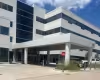
515 W. Mayfield Road Arlington, TX 76014

811 W I-20, Suite #132 Arlington, TX 76017

909 Southeast Parkway, Suite #104 Azle, TX 76020
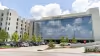
11801 South Freeway, Suite #101 Burleson, TX 76028

12200 Park Central Dr, Suite #410 Dallas, TX 75251
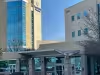
2900 N I-35, Suite #111 Denton, TX 76201

3537 South Interstate 35, Suite #111 Denton, TX 76210

1250 8th Avenue Suite #630 Fort Worth, TX 76104

800 West Magnolia Avenue Fort Worth, TX 76104

6100 Harris Parkway, Suite #285 Fort Worth, TX 76132
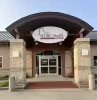
1615 Hospital Blvd Suite B Gainesville, TX 76240

223 S. Morgan St. Granbury, TX 76048

7415 Las Colinas Blvd Suite #100 Irving, TX 75063

1751 Broad Park Circle South, Suite #201 Mansfield, TX 76063

4201 Medical Center Dr., Suite #180 McKinney, TX 75069

2698 N. Galloway Suite #103 Mesquite, TX 75150

400 SW 25th Avenue Mineral Wells, TX 76067
4001 West 15th Street, Suite #200 Plano, TX 75093

5948 W. Parker Rd, Suite #100 Plano, TX 75093

630 E State Highway 114 Southlake, TX 76092

160 River North Boulevard Stephenville, TX 76401

920 Santa Fe Drive Weatherford, TX 76086
No Results Found
Nothing is turning up with that word or phrase.
Please try entering another search term, or check out our full list of Locations.
Your First Step Toward Personalized Care
Are you a new patient?
From your first appointment to your individualized treatment plan, our team is here to guide you with compassion, expertise, and support every step of the way.


Access Tomorrow’s Treatments, Today
Clinical research is at the heart of our commitment to exceptional care. Under the leadership of Dr. Ray Page, we provide patients with access to leading-edge clinical trials, bringing world-class innovation close to home.
27+
Years
Dedicated to safely administering experimental drugs and therapies
200+
Trials
Involving more than 60 experimental drugs

Care That Treats the Whole Person
Our promise to patients and their families goes beyond delivering the latest treatments. We believe exceptional cancer care means caring for the whole person, body, mind, and spirit, at every stage of the journey.
Our team is committed to providing advanced, evidence-based care while communicating clearly, supporting quality of life, and surrounding each patient with the services they need to feel informed, supported, and hopeful.
Through innovation, collaboration, and compassion, we continue striving for better outcomes, new cures, and renewed hope.
TREATMENTS & SERVICES
Advanced Cancer Care, Every Step of the Way
At The Center for Cancer and Blood Disorders, we’re here to support you through every stage of your healthcare journey. Our specialists offer the latest in chemotherapy, radiation therapy, immunotherapy, hormonal therapy, and biological therapy—plus integrative services that nurture the whole person, body and mind.
Medical Oncology
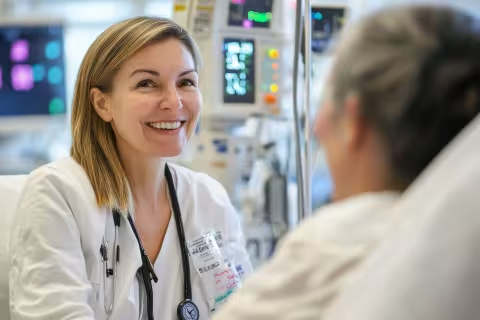
Medical oncology focuses on diagnosing, treating, and managing cancer using medications that work throughout the body. Medical oncologists use a wide range of therapies, including chemotherapy, immunotherapy, targeted therapy, hormone therapy, and other systemic treatments. They coordinate closely with surgeons, radiation oncologists, and many other specialists to ensure each patient receives well-rounded, personalized care.Patients may be referred to a medical oncologist after a concerning test result, a biopsy, or a diagnosis made by another specialist. Because every patient and every cancer is different, medical oncologists develop individualized treatment plans based on the type of cancer, its stage, and each patient’s overall health and goals. Throughout treatment, they monitor progress, adjust therapies as needed, and support patients through symptoms, side effects, and the emotional challenges of a cancer diagnosis.

CAR-T Therapy
Chimeric Antigen Receptor T-Cell therapy, also called CAR-T therapy, is an advanced cellular therapy which harnesses the body's immune system to fight cancer. CAR-T therapy modifies a patient's T-cells to target and destroy cancer cells, offering a cutting-edge approach to personalized cancer care.The Center for Cancer and Blood Disorders is proud to be one of the first community physician practices in Texas to deliver a CAR-T therapy outside a hospital or academic center. As one of the first independent practices to deliver this innovative therapy outside of a hospital in Texas, The Center's program marks a milestone in expanding patient access to cutting-edge care in cancer centers close to where patients live. Our medical oncology team was the first in Tarrant County to treat a patient with CAR-T therapy for aggressive lymphoma. The Center's CAR-T care delivery model allows for seamless monitoring and care coordination between the Center's physician-based clinic and local hospitals, ensuring patient safety and improving treatment outcomes.
Surgical Oncology
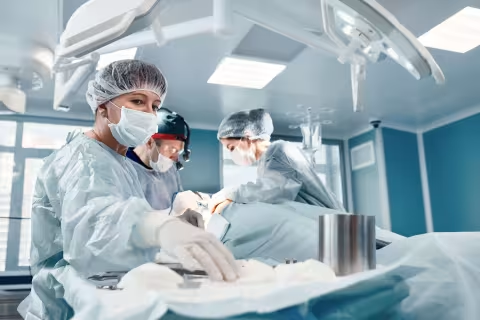
Surgical oncology focuses on the use of surgery to diagnose, treat, or help prevent cancer. Surgery may be used to remove a tumor, evaluate whether cancer has spread, relieve symptoms, or support other treatments such as chemotherapy, radiation therapy, immunotherapy, or targeted therapy. The approach your surgeon recommends depends on the type of cancer, the stage of disease, and your overall health and treatment goals. Many cancer surgeries today are performed using minimally invasive techniques that can shorten recovery time and reduce discomfort. Your surgical and oncology teams work closely together to create a coordinated, personalized plan that supports both safety and long-term outcomes.
Radiation Therapy
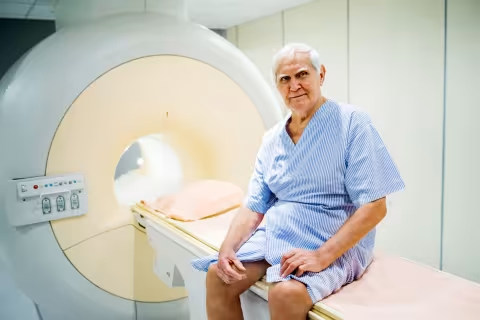
Radiation therapy uses highly targeted, high-energy radiation to destroy cancer cells and shrink tumors. It is one of the most common treatments for cancer. Radiation may be used on its own or combined with other treatments such as surgery, chemotherapy, immunotherapy, or targeted therapy, depending on each patient’s diagnosis and care plan.Radiation therapy affects only the area of the body being treated. It works by damaging cancer cells so they can no longer grow and divide. Healthy cells in the surrounding area may also be exposed to radiation, but they can usually repair themselves and return to normal function. Your care team will plan each treatment carefully to deliver the most precise dose while protecting as much healthy tissue as possible.

Clinical Trials & Research
Clinical trials and research programs offer patients access to innovative cancer treatments that are being studied for safety and effectiveness. By participating in a clinical trial, patients may receive promising therapies earlier while helping researchers learn more about how to prevent, detect, and treat cancer. Providing clinical trial opportunities reflects a commitment to high-quality, evidence-based care, supported by a team trained to follow rigorous safety and monitoring standards. Clinical trials allow patients to explore new treatment options close to home, with the support of a dedicated oncology and research team guiding them every step of the way.
Patient Support Services
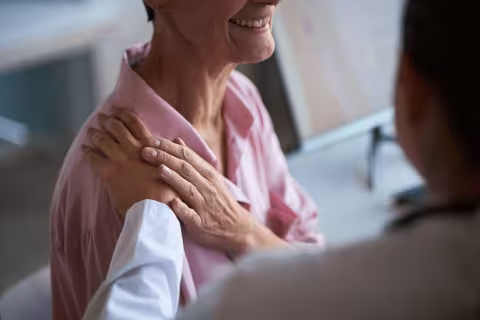
At The Center for Cancer and Blood Disorders, patient support is an essential part of our care. We offer a wide range of services designed to support the physical, emotional, spiritual, and practical needs of patients and their loved ones. These programs help manage symptoms, reduce stress, improve quality of life, and provide guidance throughout diagnosis, treatment, survivorship, and beyond. All support services are available by appointment, and many are provided at no cost to established patients.
Low Dose Radiation Therapy
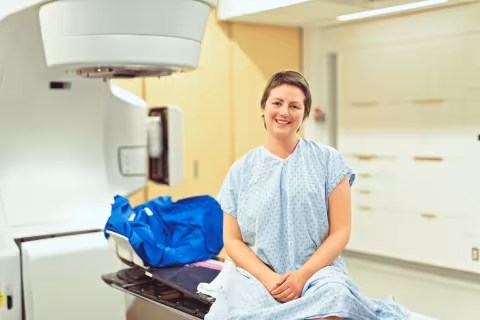
Low-Dose Radiation Therapy (LD-RT) is a noninvasive treatment designed to target inflammation and relieve pain in affected areas. Unlike traditional high-dose radiation used for cancer, LD-RT uses much lower doses to reduce irritation in tissues, helping patients manage pain without the need for surgery or extensive recovery time.This therapy is typically delivered in outpatient sessions, allowing patients to resume their normal activities immediately afterward. LD-RT can be used for a variety of conditions, including joint or musculoskeletal inflammation, and is carefully planned to maximize relief while minimizing exposure to surrounding healthy tissue. It offers a safe, effective, and convenient option for patients seeking pain management without invasive procedures.

Express Workup Clinic
The Center for Cancer and Blood Disorders is your trusted resource for identifying surveillance opportunities and/or managing potential cancer issues as early as possible.Patients don't need a confirmed diagnosis to be seen, our team provides expert evaluation, diagnostics, and next-step guidance when you find or see something suspicious on a scan, scope, or lab result.

Rheumatology
Rheumatology focuses on diagnosing and treating conditions that affect the joints, muscles, bones, and immune system. Rheumatologists care for patients with autoimmune and inflammatory diseases that can cause pain, stiffness, swelling, and long-term damage if untreated. These conditions may occur on their own or alongside cancer or cancer therapies, making specialized evaluation especially important. Rheumatologists use physical exams, imaging, and laboratory testing to understand the cause of symptoms and develop treatment plans tailored to each patient’s needs. Treatment may include medications, injections, lifestyle guidance, and coordinated care with other specialists to help reduce inflammation, manage pain, and improve mobility and quality of life.
Our Impact In Numbers
What began as a simple idea, driven by our founders' belief, has grown into something far greater than they ever imagined.
Today, that vision lives on in everything we do. It's reflected in the milestones we've reached, the community we've built, and the trust we've earned along the way. What started as ambition has evolved and continues to evolve into prove results.

Statistics
30+
Years
Providing exceptional care and support since 1990
8
Languages
Communicating in 8 languages to better serve our diverse community
25K+
Patients Annually
More than 25,000 patients trust us each year to guide them on their healthcare journey
22
Locations
Proudly serving our community with convenient locations across the DFW metroplex
Meet Ann Kurian, MD, MS - Breast Surgeon

Are You Tired of Joint Aches and Pain?
Do you have Osteoarthritis? Are you over 50 years old? And tried other treatments like medication, therapy, injections with no relief? Would like to avoid or delay surgery?
WE CAN HELP!
Low-Dose Radiation Therapy (LD-RT) is a noninvasive treatment that targets inflammation and helps reduce pain, without surgery or downtime.

Latest News, Events & Insights

Cancer clinical trials play an important role in advancing cancer care and may also be a treatment option for eligible patients. However, misconceptions about how they work can make patients hesitant to consider participating. Clinical trials help researchers evaluate new treatments, new combinations of existing treatments and other approaches that may eventually become part of standard cancer care.For patients, however, the words "clinical trial" can sometimes bring uncertainty. Will I receive a placebo? Does participating mean there are no other treatment options? Will I be treated like a test subject?Understanding what clinical trials actually involve can help patients and their families have more informed conversations with their care teams.
Published Date: October 20, 2026

Not long so, CAR-T cell therapy was available only at a handful of major academic medical centers. For patients who needed it, that often meant traveling far from home, staying near a treatment facility for weeks, and navigating a system that felt distant from the community-based care they were used to. For many, logistics alone were a barrier.That picture has changed significantly. CAR-T therapy is reaching more patients, in more places, than ever before. And for patients treated within community oncology practiced like The Center for Cancer and Blood Disorders, that shift has real, practical meaning.
Published Date: October 14, 2026

Liver cancer surveillance can help detect cancer earlier in people who are at higher risk, often before noticeable symptoms develop. Unlike some cancers that may cause warning signs in their early stages, liver cancer can develop quietly. Symptoms may not appear until the disease has progressed, which is one reason regular monitoring can be important for certain people with chronic liver disease or other risk factors.Liver Cancer Awareness Month is an opportunity to understand not only the disease itself, but also who may be at increased risk and when regular surveillance may be appropriate. Knowing your personal risk factors and talking with your healthcare provider can help determine whether ongoing monitoring should be part of your care.
Published Date: October 8, 2026
Liver Cancer